Thiele-Small Parameters: The Foundation
Every physics-based loudspeaker model starts with Thiele-Small (T/S) parameters — a set of measured electrical and mechanical constants that describe how a driver behaves when mounted in an enclosure. Resonant frequency (Fs), moving mass (Mms), compliance (Cms), voice coil resistance (Re), and force factor (Bl) together define the small-signal behavior of the driver.
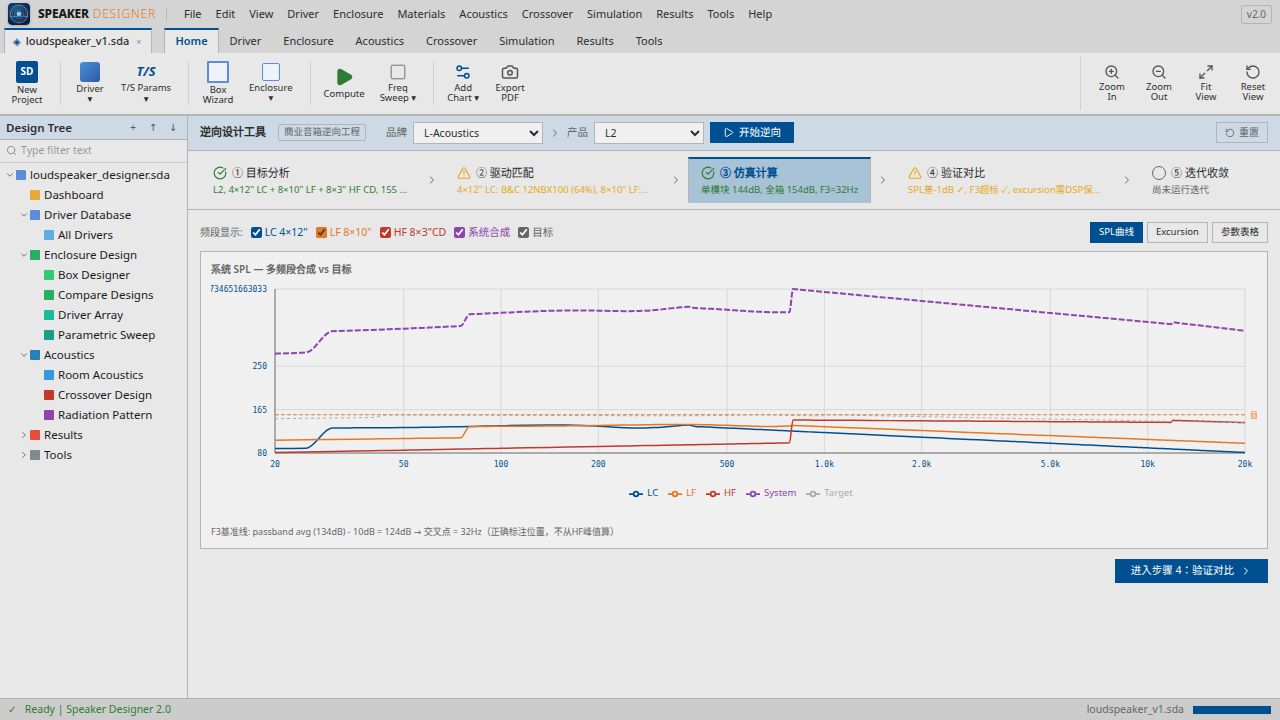
Speaker Designer uses T/S parameters as the starting point for enclosure simulation. By solving the differential equations for the driver-enclosure system, we can predict the frequency response, phase, group delay, and cone excursion across the full operating range — before building any physical prototype.
Enclosure Acoustics: Sealed, Ported, and Band-Pass
The enclosure type fundamentally shapes the low-frequency response. A sealed enclosure provides flat group delay and controlled rolloff but sacrifices efficiency. A ported enclosure extends bass output by coupling the port resonance to the room, at the cost of a steeper rolloff below tuning. Speaker Designer models all three principal types and solves for optimal port dimensions given target tuning frequency and driver parameters.
Crossover Synthesis and Phase Coherence
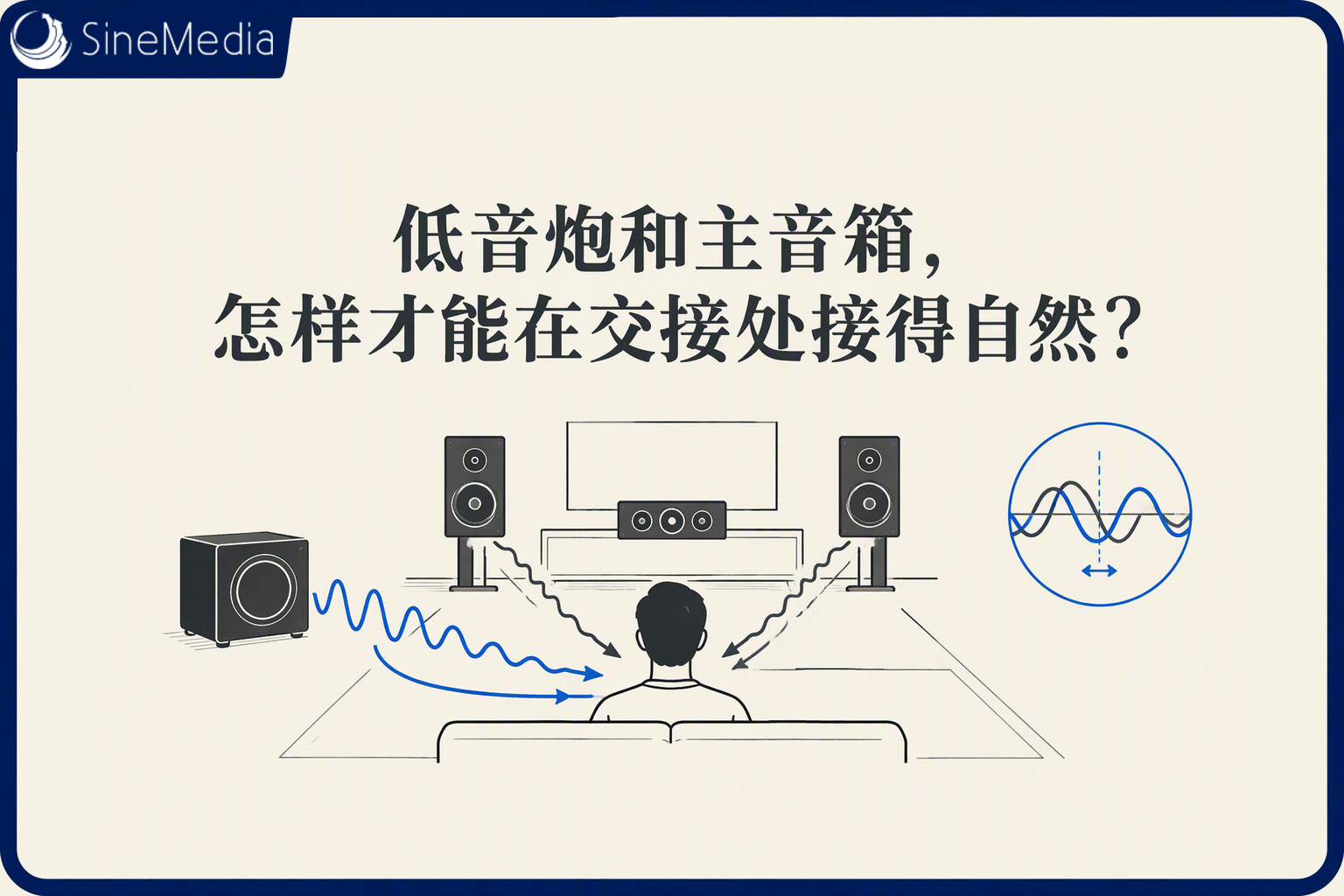
A multi-way speaker system is only as good as its crossover. Poor crossover design creates phase discontinuities at the crossover frequency, causing comb filtering and off-axis colorations that measurement data can easily miss. Speaker Designer synthesizes Linkwitz-Riley and Bessel crossover families and runs phase-summing verification across the crossover region for all driver combinations.
FIR Correction: Fixing What Passive Networks Cannot
Passive crossover networks are limited by the physics of inductors and capacitors — they can approximate ideal filter shapes but never achieve them exactly. FIR digital filters, by contrast, can implement arbitrary frequency and phase responses with mathematical precision. The final stage of the Speaker Designer workflow exports a set of FIR coefficients that corrects residual response errors, phase mismatches, and resonances that survive the crossover design process.
- Minimum-phase and linear-phase FIR options for different latency budgets
- Automatic notch detection for driver breakup modes
- Phase-aligned export for multi-way systems
- Direct coefficient export for SINE DSP targets